




Useful WebSites:




April 1999
July 2000
November 2000
December 2000
January 2001
February 2001
March 2001
April 2001
May 2001
June 2001
July 2001
August 2001
September 2001
October 2001
November 2001
December 2001
January 2002
February 2002
March 2002
April 2002
May 2002
June 2002
July 2002
August 2002
September 2002
October 2002
November 2002
December 2002
January 2003
February 2003
March 2003
April 2003
May 2003
June 2003
July 2003
August 2003
September 2003
October 2003
November 2003
December 2003
January 2004
February 2004
March 2004
April 2004
May 2004
June 2004
July 2004
August 2004
September 2004
October 2004
November 2004
December 2004
January 2005
February 2005
March 2005
April 2005
May 2005
June 2005
July 2005
August 2005
September 2005
October 2005
November 2005
December 2005
January 2006
February 2006
March 2006
April 2006
May 2006
June 2006
July 2006
August 2006
September 2006
October 2006
November 2006
December 2006
January 2007
February 2007
March 2007
April 2007
May 2007
June 2007
July 2007
August 2007
September 2007
October 2007
November 2007
December 2007
January 2008
February 2008
March 2008
April 2008
May 2008
June 2008
July 2008
August 2008
September 2008
October 2008
November 2008
December 2008
January 2009
February 2009
March 2009
April 2009
May 2009
June 2009
July 2009
August 2009
September 2009
October 2009
November 2009
December 2009
January 2010
February 2010
March 2010
Another Leasing Rip-Off
I’ve frequently commented on how leasing vehicles is a big rip-off for several reasons, especially the 20% to 30% implicit interest rate built into the payments. The per mile penalties for excess mileage also add to the deceptively low monthly charge.
Until I saw this article, courtesy of AutoBlog, I wasn’t aware that lessees weren’t covered by the same manufacturer’s warranties as are buyers. The guy in the article won his case to be covered by the warranty, but he had to go through the expense and hassle of bringing legal action against Honda.
One more reason to stay away from vehicle leases.
- posted by Kerry M. Kerstetter, MBA~CPA~ATP~ATA @ 3/31/2005 06:26:00 PM Send this post:


Q:
Subject: Depreciation Recapture
For purposes of determining the basis of the relinquished property (single family rental dwelling) in a 1031 exchange, do we need to recapture the depreciation on the property taken on the straight line method? Please help.
A:
The depreciation you have claimed on the old property does reduce its costs basis on your books.
However, you do not have to recapture - pay tax on - any depreciation because of the 1031 exchange if your replacement property meets or exceeds the target price and you don't take any cash (aka boot) out from the transaction. The basis of your old property is rolled into your new replacement property, via IRS's Form 8824.
If you do take some cash out or acquire a property for less than the net sales price of your old one, you will have taxable gain to report, which will be the depreciation recapture because that is subject to the highest tax rate (generally 25% for IRS).
I hope this helps you understand the process a little better. Your personal tax advisor should be able to fit this to your specific numbers.
Good luck.
Kerry Kerstetter
Labels: 1031
- posted by Kerry M. Kerstetter, MBA~CPA~ATP~ATA @ 3/31/2005 05:49:00 PM Send this post:
Q:
Kerry,I found your site very helpful. Thanks.I am trying to plan my 2005 tax year. I have a pavement marking business which is a C Corp with it's year ending in March. I am trying to get the income below the magic $50,000 income level taxed at 15%. Anyways I have been considering changing to a S Corp since this coming year 2005 I will have a substantial bottom line after 350,000- 400,000 maybe higher. The problem for me is I am also the guy with a ex-wife which is receiving 29% and she does not have a clue that my business has expanded since we split. My lawyer tells me a C Corp is better and my account tells me a S Corp is better if it has a lot of cash left.Anyways, I am trying to plan for the future modification of child support (even though it settled very well for her) I know it will never be enough if she looks in the corporation- which I think she has the right to in a discovery. It has been a little over a year since the divorce was final.Currently I am engaged and will be married in Sept of this year. Is it possible to maybe form a S Corp in her name and assign the large contract to my new wives company and keep the income lower in my C Corp to help us get the out without opening me up to the above problem. Any thought would help, I appreciate it very much.
A:
Check out what I have here on my website and you will see a case very similar to yours regarding child support:
From what you are saying, it seems that using an S corp would make matters worse for you.
Good luck.
Kerry Kerstetter
- posted by Kerry M. Kerstetter, MBA~CPA~ATP~ATA @ 3/31/2005 05:44:00 PM Send this post:
Q:
Kerry,I live in the state of Arizona and bought a new home 13 months ago. I'm in the process of buying a second home and would like to sell my current home, but I'm worried that I will be hit hard with a capitol gains tax at the end of the year for selling my first home before the 2 year mark. I came across your website that was filled with great information which I also read on the IRS webpage. Do you know where I can find more information about the 'pro-rated exclusion ' listed on your webpage. I know of the three main categories (health, work, or other unforeseen circumstances.) ,but I want to know more about the specific excuses that are acceptable for each of the categories. I have some reasons for moving to the other side of town, but I'm not sure if they would pass for legitimate claims to get the exclusion.Thanks,
A:
It would be impossible for IRS to list every single reason to justify the use of the pro-rated exclusion; so I wouldn't hold my breath waiting for that to be released.
Those main categories are very wide, especially the "unforeseen circumstances" one. If something unexpected has changed in your life since you bought your current house that requires you to move, you should be okay.
Check with your personal tax advisor for more specific planning.
Good luck.
Kerry Kerstetter
- posted by Kerry M. Kerstetter, MBA~CPA~ATP~ATA @ 3/31/2005 05:41:00 PM Send this post:


Know the Real Price Of New Mortgages – Low monthly payments aren’t always a good thing, especially if there is negative amortization, with the loan balance increasing every money.
- posted by Kerry M. Kerstetter, MBA~CPA~ATP~ATA @ 3/30/2005 06:06:00 PM Send this post:
Pulling Numbers Out Of Thin Air
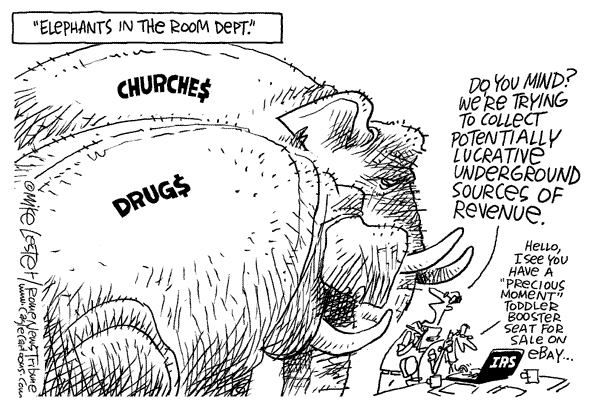
IRS Sees $300 Billion Gap – Since the media continue to accept these kinds of statements from IRS as absolute fact, I will once again remind everyone that these highly publicized tax gap figures are nothing more than WAGs (wild ass guesses). I have done my own research with IRS personnel as to their source of the unreported income and its tax. They have admitted to me that such measurements are impossible to make with any definitive accuracy. They claim that their made up numbers are as accurate as anyone else’s because there is no way to dispute them. It’s just the standard IRS scare tactic for tax season.
Again, as I’ve said for decades, the premise that everyone is a tax cheat is bogus. I have reviewed thousands of tax returns prepared by taxpayers and other tax pros and can unequivocally state that people pay too much in taxes through a combination of ignorance and incompetence in filling out the tax forms. I have seen plenty of people who even intentionally overpay their taxes as a way of trying to keep IRS off of their backs. In the private market organized crime world (as opposed to the government sponsored one), this is usually referred to as “protection” money.
So, I feel extremely confident in declaring that the tax gap in this country is not anywhere close to a negative $300 billion; but is quite possibly a positive figure, with people paying too much. My numbers can’t be verified or disputed with any scientific accuracy; but at least I’m honest about that fact. Not like the IRS and their lackeys in the media who will use their imaginary figure to justify more money and power for taxpayer harassment.
- posted by Kerry M. Kerstetter, MBA~CPA~ATP~ATA @ 3/29/2005 10:20:00 PM Send this post:
There is no end in sight of the people who are quick to set up corporations and LLCs, without the foggiest idea of what those entail, just because someone told them that was the cool thing to do.
Q:
Subject: Poor me
Hi, Great tax info. Now my request for the free advice. I set -up a C-Corp March 23, March 2004. We have approx. $30,000.00 in deductions (or at least I thought so). However, since we were just starting the biz, we have not sold anything...or made a profit.Our tax person says we are out of luck as far as the deductions go (since we are not an S Corp) and we must pay the $800.00 annual fee regardless. We have not made any sales, since we are still forming.Anything good you can suggest or advise?Thanks,
A:
If any of this surprises you, it means that you and your tax advisor didn't adequately discuss the details of owning a corporation in the PRC before you set it up.
From the moment your corp is chartered, until all of the proper papers have been filed to dissolve it, it is required to pay the $800 per year minimum tax, whether any actual business is conducted or not. That is the way it has always been.
The $30,000 of deductions in your C corp aren't lost; so there's no real reason to be upset . It's true that you can't deduct them on your 1040. However, they will create an NOL (net operating loss) that can be carried over into future years, offsetting the corporation's income from those years.
If there won't be any corp income for a few more years, you may want to consider setting up a Schedule C on your 1040 and paying the expenses with your personal money so that you can obtain some tax benefit from them sooner.
I'm not sure what you are looking for from me; but it sounds like you need to work more closely with your tax advisor.
Good luck.
Kerry Kerstetter
- posted by Kerry M. Kerstetter, MBA~CPA~ATP~ATA @ 3/29/2005 06:52:00 PM Send this post:
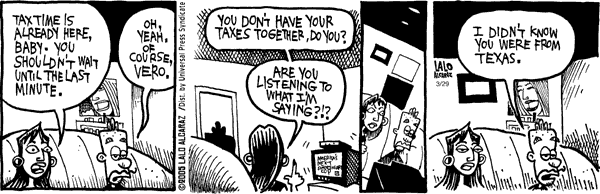
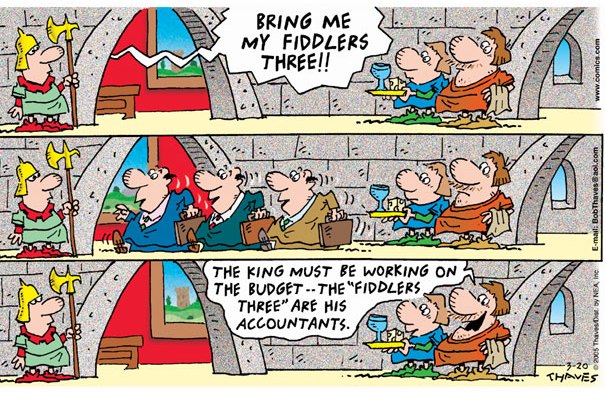
Accounting is back in vogue – “Financial CSI” is an interesting way to look at what we do.
- posted by Kerry M. Kerstetter, MBA~CPA~ATP~ATA @ 3/28/2005 11:05:00 PM Send this post:
IRS May Tax Your eBay Sales – This is nothing new. If you sell something for more than it cost you, the gain is taxable. It has always been that way.
If you have a lot of money coming in and don’t show it on your tax return, IRS will assume everything you sold was free and assess taxes on the full amount received. As I’ve always said, over-documenting things on tax returns, such as eBay sales that had losses or break-even, is a good self defense measure. If you don’t formally declare that there is no taxable net profit, IRS can and often does assume that every penny received is pure taxable profit.
- posted by Kerry M. Kerstetter, MBA~CPA~ATP~ATA @ 3/27/2005 09:29:00 PM Send this post:
Q:
I have a friend that is going through a very nasty divorce in the state of Georgia. The divorce has been made more complicated by a joint interest held in a beach house with another couple. They are going through negotiations at this time to liquidate their interest in the beach house, but they aren’t sure how that liquidation is going to be taxed. Husband makes 80k, wife makes 50k. They are jointly to receive 115k (57.5k each) from the sale of their interest in the beach house. They arrived at this figure by having the house appraised (450k) less the note still remaining on the house (200k) dividing by two since there are two couples co-owing the home and then dropping the price 10k to motivate the other couple to buy them out.
I am nowhere near an accountant and don’t claim to be but have done some online research for my friend and as I understand it…..since the house was appraised with contents, that amount along with other landscaping improvements can be deducted from the amount of the capital gains. And then if I am reading your site correctly, the remaining amount would be taxed at 15%. Now….big question is, is the sale also included in their “income” which would put the wife in a higher tax bracket? Or, is it simply noted somewhere else as capital gains?
I would appreciate any light you could shine on this question. Thank you so much for your help!
A:
There are several issues that "your friend" needs to cover in regard to this matter when consulting with a tax pro, such as the following.
How was the beach property being used? If it was rental property, there are issues of depreciation recapture and the possibility of using a tax deferred 1031 exchange to reinvest the proceeds into new real estate.
If it was only used personally, there won't be any depreciation recapture and it doesn't qualify for a 1031 exchange.
As you describe it, the husband is selling a 25% share of the property and the wife is selling a 25% share. Using your figures, each would be reporting a sales price of $107,500. IRS treats the $50,000 relief of debt that each will be receiving the same as cash.
You didn't say how much the property cost. When calculating the gain on the sale, you need to properly determine your cost basis in what is being sold. This would start from 25% of the original purchase price, plus any capital improvements, as well as any furnishings and appliances that were purchased and included with the property. Depreciation that had been, or could have been, claimed reduces the basis.
The effective tax rates on the gain will be affected by their other income. A lot of other income could very easily push part or all of the gain into the higher 15% Federal rate, and would be calculated using the worksheets on page 2 of Schedule D.
There will also be Georgia income tax to pay.
A tax pro can give more precise advice based on your friend's particular circumstances.
Good luck.
Kerry Kerstetter
Labels: 1031
- posted by Kerry M. Kerstetter, MBA~CPA~ATP~ATA @ 3/26/2005 07:04:00 PM Send this post:
Q:
I read with interest your answers to questions concerning 1031 exchanges, particularly converting a rental home to personal use.I have a rental home acquired in May 2004 thru a 1031 exchange. Due to some unforeseen circumstances, I may need to move into this home and make it my personal residence as of August 2005. My tax preparer indicates to me that if I live in it for 2 years I will be able to use the tax free exclusion due to the fact that the exchange was done before October 2004 when the 5 year rule was put in place.He indicates that any exchanges or sales done before October 2004 are covered by the old 2 year rule.
I would appreciate your opinion on this matter.
A:
I covered this here:
http://www.taxguru.net/2004/10/selling-converted-exchange-property.html
Kerry Kerstetter
A reminder to please use the search tool at the top of this page to see if I have already discussed a topic before sending me questions. I use it all the time myself to go back over the several years of postings. I do not have time to repeat myself or send everyone the links to individual postings.
Labels: 1031
- posted by Kerry M. Kerstetter, MBA~CPA~ATP~ATA @ 3/26/2005 06:45:00 PM Send this post:
Signs You Are Using The Wrong Financial Planner

- posted by Kerry M. Kerstetter, MBA~CPA~ATP~ATA @ 3/25/2005 05:07:00 PM Send this post:
Hawaii bill would let pets get trust money – There are now 18 states that allow people to leave their estates to their non-human family members.
- posted by Kerry M. Kerstetter, MBA~CPA~ATP~ATA @ 3/25/2005 05:02:00 PM Send this post:
New From Hallmark

- posted by Kerry M. Kerstetter, MBA~CPA~ATP~ATA @ 3/25/2005 04:31:00 PM Send this post:
Error Makes Money Machine Give $100 Bills instead of Twenties – A rare case of a casino machine paying off consistently. Maybe we’ll see more people playing the ATMs than the normal slots. The worse that can happen is that the player breaks even, and in cases like in this Iowa casino, there could be big winnings.
- posted by Kerry M. Kerstetter, MBA~CPA~ATP~ATA @ 3/25/2005 12:44:00 PM Send this post:
In the Hottest Markets, Renting Is a Bargain – As much of a believer as I am in real estate investments, there are times when renting does make much more financial sense than buying.
- posted by Kerry M. Kerstetter, MBA~CPA~ATP~ATA @ 3/24/2005 10:58:00 PM Send this post:
Personal Tax Returns Posted On Internet
Michelle Malkin has some very scary info on people who haven’t been careful about which folders on their computers they make available for sharing with others across the internet. The result is some people have had their tax return files copied without their knowledge, and some have even been posted on the ‘net. The moral of this story is to both restrict which folders can be accessed via the peer to peer programs, as well as keep sensitive files in locations that are not accessible by anyone except yourself.
- posted by Kerry M. Kerstetter, MBA~CPA~ATP~ATA @ 3/24/2005 04:56:00 PM Send this post:
Choice of Taxation
Taxes on stupidity, such as gambling, are probably the only ones that are actively encouraged by their targets, for obvious reasons.

- posted by Kerry M. Kerstetter, MBA~CPA~ATP~ATA @ 3/24/2005 03:48:00 PM Send this post:

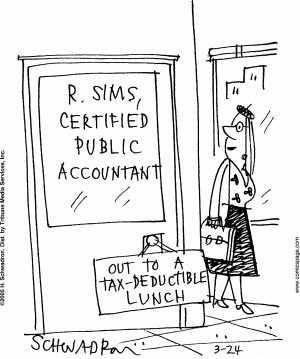
Minimum wage, maximum folly – Whenever our rulers stick their noses into trying to artificially manipulate market forces, the results are always completely opposite from their stated goals. Will they ever learn to butt out? Not in this lifetime.
When Unmarried Couples Tie the Real-Estate Knot
- posted by Kerry M. Kerstetter, MBA~CPA~ATP~ATA @ 3/23/2005 11:06:00 PM Send this post:
Q:
Subject: Primary Residence Tax ExemptionI have a question regarding the tax exemption on the sale of a primary residence.
I called the IRS and based on what they told me it didn't sound like I would not qualify.
I am in the military and relocated to Yuma in February 2004.
I did a build contract on a house in December of 2003 prior to moving to Yuma, AZ.
The house was not completed until August 15 2004.- The house is a 4 bedroom 2 bath 1768 sq ft.- At the time that I purchased the house in December of 2003 it was only my girl friend, domestic partner of 4 years, and myself. We both have 2 children each from a prior marriage. I have a son 14 and a daughter 11 and she has a son 12 and a daughter 8. We had only anticipated having our children during visitations. Since moving to Yuma 3 of them have come to live with us full time and still a possibility of the 4th coming too as there is a custody hearing pending.- We want to buy a bigger house 5 bedroom 2 bath 2200 sq ft to better accommodate everyone. The 4 bedroom is workable, but it is a small 4 bedroom and very cramped for 6 people. There has been about $90,000 in equity increase in my current house, the new house I would like to upgrade to will cost $235,000 I will be using all of the equity from the sale of our current house towards the new house and is a big consideration prior to entering a contract that I might get stuck paying money out of pocket to cover the 15% in taxes on the capital gains of my current house.Is there any more information out there to clarify whether or not I would qualify for an exemption under 2 years? By the time the new house would be completed I will have lived in my current house about 16 months.
Thank you for your time,
A:
Your use of a double negative regarding what the IRS told you has me confused. However, it really doesn't matter in the least since it is a well documented fact that over half the time anyone calls IRS, they are given completely wrong answers.
As you should know, the burden of proof in any tax matter lies with you.
This means that, in the highly unlikely chance that an IRS agent were to challenge you, if you feel confident that you could defend your position that when you moved into your current home, you had no idea that there was a likelihood of your needing to house six people on a full-time basis, and that this requirement came as a complete surprise to you, you would qualify for the pro-rated tax free exclusion of the gain on your home sale.
Assuming the house is just in your name, you would qualify for $342.46 ($250,000 / 730 days) of tax free profit for each day that you owned and occupied the home. You cannot count the time before you actually moved into the home. Working backwards from your guesstimate of a $90,000 gain, you would need to have lived in the home for at least 263 days to exclude all of it. From your description, this sounds like it will be no problem.
What you do with the sales proceeds, as well as how much you spend on a new home, are completely irrelevant. What is helpful for your case is the fact that you are buying a much larger house based on square footage and number of bedrooms. This would go a long ways in supporting your contention that you were essentially forced to sell the old home prior to two years because of the unexpectedly larger family size. It would be a much different story if you were buying a new home of the same size as your old one.
So, the more I think about this set of facts, the more confident I feel that you do qualify for the pro-rated exclusion.
I hope this helps. Your personal tax advisor should be able to work out more specifics for your case.
Kerry Kerstetter
- posted by Kerry M. Kerstetter, MBA~CPA~ATP~ATA @ 3/23/2005 05:58:00 PM Send this post:
Q:
Subject: Please help me undertand:OK - My Personal Residence is worth 2.5 Mil.My Wife & I moved in 10 yrs. ago but it was purchased out of proceeds from a couple 1031 roll-overs started in 1985 and that original purchase was $85,000.00I want to sell and buy a lesser personal residence priced at 2.0 Mil. Can I take the $500,000.00 and put in my pocket with no further tax consequence or do I get hammered for $ Two Million worth of profit.Thank you,
A:
There hasn't been a residence replacement requirement since 1997, so what you do with the sales proceeds will have no effect on your tax bite. You can see the current rules here.
If you sell the home as your primary residence, your gain will be approximately $2,415,000 assuming your cost basis is that $85,000 figure. It will obviously be lowered by any capital improvements you have put into it and any selling costs. It will be increased by depreciation while it or its predecessors were used for business or rental.
You and your wife are eligible for $500,000 of tax free gain. This means the remaining $1,915,000 will be taxable. Except for the depreciation recapture portion, it will be taxed as long term capital gain.
For that kind of money, you should be consulting with a tax pro. There are a number of ways to reduce the tax hit, including recognizing any capital losses that you may have in your portfolio. A more aggressive tax saving technique would be to convert the home to rental and then do a 1031 exchange with it
Good luck.
Kerry Kerstetter
Follow-Up Q:
Thank you for your reply, after my E to you I found another article, and with all due respect I have enclosed a link that states the opposite.As I read it, the example is exactly my scenario.Two thirds down the article please see "IS THE REVERSE TRUE"It states I believe that when the property status is changed from a 1031 Income to a Personal Res. that the gain is deferred and the cost basis begins then. (We moved in 1994)AM I WRONG??
A:
Actually, you are seriously misinterpreting the rules here.
Converting a home from rental to personal, or vice versa, is not a taxable event and thus does not change its cost basis. It remains the same.
That section called "Is The Reverse True" really deals with the pre May 1997 rules for residence replacement and is no longer relevant.
You really need to be working one on one with a tax pro on this.
Good luck.
Kerry Kerstetter
Labels: 1031
- posted by Kerry M. Kerstetter, MBA~CPA~ATP~ATA @ 3/22/2005 04:32:00 PM Send this post:
Q:
Subject: stock options
Dear TaxGuru,
My broker did Not include my Stock Options transactions in my 1099-B, and i can't find in the instructions for Schedule D, or anywhere on any IRS publication how to deal with stock options. Are these transactions invisible ? Do stock options have to be reported ? if so, how ?
Thank You Much.
A:
Stock option transactions do have to be reported on Schedule D in the year in which the deal is closed.
Because puts and calls often cross over into different tax years, and are frequently done in different directions, stockbrokers don't need to send this data to IRS because it isn't as easily matched with Schedule D as regular stock sales. This in no way lessens your obligation to report each closed deal on your tax returns.
The timing of when to report these transactions can be a little tricky. My advice is to engage the services of a tax pro who understands how these work to make sure it's done properly. This is not something you want to try on your own. Even many tax pros screw these up all of the time, so make sure whoever you hire has experience entering puts and calls on Schedule D.
Good luck.
Kerry Kerstetter
- posted by Kerry M. Kerstetter, MBA~CPA~ATP~ATA @ 3/22/2005 04:03:00 PM Send this post:
Q:
Subject: nother sextuin 179 questionThis is one of those questions that almost afraid to ask because the answer seems so simple that I must be missing something REALLYobvious. However, I havent been able to find a definate answer or anytthing suggestive. Ive spent 2 or 3 hours searching for some kind of answer with no luck, so here it is-Is the section 179 only good for two items which space is provided for on the form? Is there an item number limit for this deduction?Thanks for your time.
A:
I have seen plenty of people, including some tax pros, with the mistaken belief that the number of blank lines on an IRS form dictates how many items can be listed. That is absolutely not the case. Whenever you have more items than blank lines available, enter "See Attached" and have a detailed listing. This is done automatically by most tax prep software.
For Section 179, there is no numeric limit to the number of new business assets for which it can be claimed on each year's tax return. All that matters are the dollar values. I have prepared returns where we had two and three full pages of small dollar items listed, totaling up to the maximum available, or even lower.
Good luck.
Kerry Kerstetter
Labels: 179
- posted by Kerry M. Kerstetter, MBA~CPA~ATP~ATA @ 3/22/2005 03:55:00 PM Send this post:
Q:
Subject: Converting property acquired through a 1031 exchange to primary residence
I have a rental property that I acquired through a 1031 exchange and would eventually like to move into it and make it my primary residence. The exchange took place in July 2004 and the home is presently rented for a year. Is there a specific period that you have to wait before we can make the conversion? Do you know of any IRS tax case law or hearing decisions regarding these types of conversions?
A:
There is no statutory length of time required before converting a rental home to personal use. Obviously, the longer, the better because real life events go a long way in proving intentions.
There is now a five year waiting period for a home acquired via a 1031 exchange to be eligible for the Section 121 tax free gain of up to $250,000 per person.
What is most important in regard to a conversion from a rental to personal use is that this not be pre-planned at the time of the 1031. The idea of making the conversion must arise after the new property has been used for the rental or business purposes that qualify it as suitable replacement property for the previously owned property. If IRS were to learn that your intention at the time of acquiring the new property was to live in it yourself, they have the power to nullify the 1031 exchange and force you to pay the taxes on the original sales, plus penalties and interest.
Not that people don't plan these kinds of things out ahead of time. The smart ones keep such plans to themselves and make sure all documents and witnesses can verify that any conversion plan arose well after taking title to the new property. The stupid people shoot their mouths off about the plan, telling everyone of their intentions, and end up in deep doo-doo as a result.
I hope this helps.
Kerry Kerstetter
Labels: 1031
- posted by Kerry M. Kerstetter, MBA~CPA~ATP~ATA @ 3/22/2005 03:51:00 PM Send this post:


Selling Mixed Use Property
Q:
Hello,
I bought my property two years ago and I live there ie. it is my primary residence, however I have been renting out two rooms in the house. If I sell now that it has been two years later, do I still have to pay taxes when I sell the house? I have been claiming rental income on the house.
Thanks,
A:
What you have is a sale of mixed-use property; part personal and part rental.
The sales price and cost basis will have to be allocated between the two types of property, generally based on what you have been showing on the depreciation schedule for the rental portion.
The gain from the primary residence portion would be eligible for the up to $250,000 of tax free profit.
The gain from the rental portion would be taxable unless you set that portion of the sale up as a 1031 exchange, under which you would have to reinvest the proceeds into new business, investment or rental property within 180 days via the services of an exchange accommodator.
You definitely need to be working with a tax pro in setting up the best strategy for you.
Good luck.
Kerry Kerstetter
Labels: 1031
- posted by Kerry M. Kerstetter, MBA~CPA~ATP~ATA @ 3/21/2005 06:13:00 PM Send this post:
All businesses have these kinds of financial partners

- posted by Kerry M. Kerstetter, MBA~CPA~ATP~ATA @ 3/21/2005 10:34:00 AM Send this post:
Q:
Subject: Setting up corporation
Which state is most favorable for establishing a corporation? I will be operating out of Virginia.At current, I operate a small business out of Georgia under Sole-proprietary structure.
A:
That is not something that can answered quickly. There are pros and cons to each state.
Where you actually charter the corporation isn't as important as where your corporation actually conducts business. One of the most common mistakes I see people make is assuming that just by incorporating in a tax free state, they are automatically exempt from state income tax. It becomes a very expensive lesson for those people when they learn that any state in which your corp operates will require that you file corp tax returns and pay its state income and franchise taxes, regardless of where the corp is chartered.
There are ways to source and shift income into tax free states that will depend on what kind of business you will be running. You will need to work with a tax pro who is familiar with state taxes and strategies for shifting and sourcing income into the lowest tax states.
Good luck.
Kerry Kerstetter
- posted by Kerry M. Kerstetter, MBA~CPA~ATP~ATA @ 3/20/2005 10:09:00 PM Send this post:
S vs C Corps
There is still no shortage of confusion over the differences between C and S corporations, as I’ve been trying to explain for so many years now. Some typical examples:
Q:
Kerry,I saw your article on C Corp vs. S Corp on your website. I am a CPA with a handful of small business clients. I have a real estate broker client wanting to incorporate. My gut reaction was to recommend S Corp due to double taxation but after reading your article, I am second guessing myself.I'm tempted to recommend C Corp so that she can deduct her health insurance and other out of pocket medical expenses thru corp. I assume we could take care of the double taxation issue at year end by bringing the profit down by either additional wages or retirement plan contributions. Any advice would be appreciated.
A:
We have dozens of Realtor clients who are saving huge amounts of taxes for all of the reasons that I spell out in that piece contrasting C & S corps, not just the health insurance.
Kerry Kerstetter
Q:
Hi Kerry,I'm in North Carolina my CPA advised me to start an S-Corp and I did so. I'm a recruiter and have little overhead and have billed around $36Kmy first qtr. What are your thoughts on this? Should I have started aC-Corp instead?
A:
I really don't have enough information to be second guessing your CPA.
However, I do frequently find people jumping into S corps without properly thinking things through. If your CPA didn't take into consideration the various points I covered on my web page comparing S & C corps, he may have steered you wrong.More often than not, a profitable business can save huge amounts of taxes by using a C corp instead of an S.
Good luck.
Kerry Kerstetter
- posted by Kerry M. Kerstetter, MBA~CPA~ATP~ATA @ 3/20/2005 09:40:00 PM Send this post:
Q:
Subject: Sec. 179 questionA "Sec. 179" Google search got me to your website and since you're the Tax Guru I was wondering if you might answer a (hopefully) quick question. I've read that the 50% Sec. 168 deduction is optional and that sometimes it is favorable to take it at 30% and other times not take it at all. I take it 168 deductions can not be carried forward like 179 deductions so taking it in a loss year would be like throwing it away? Can you affirm or clarify this issue for me? Also, is it ever unfavorable to take the entire allowable 179 deduction. Why would it be if one can carry forward the deduction?
Okay, I know, that's two questions. Any feedback would be appreciated.
Thx,
A:
You don't lose anything if you opt not to claim any or all of the Section 179 or first year bonus depreciation. That just leaves more cost basis to be claimed in future years either as depreciation or as cost basis when the asset is sold. I frequently choose not to claim any of those extra first year deductions if we already have plenty of other deductions. This saves more for future deductions.
I hope this helps you understand. Any good tax pro should be able to help you fine-tune the depreciation & Sec. 179 deductions you claim in order to give you the overall best tax savings.
Good luck.
Kerry Kerstetter
Labels: 179
- posted by Kerry M. Kerstetter, MBA~CPA~ATP~ATA @ 3/19/2005 05:33:00 PM Send this post:
Tax Software vs. Tax Preparer - Is There a Clear Winner? – As I’ve said many times, there is no better example of GIGO (garbage in, garbage out) than with tax software.
File Your Taxes: There Are NO Good Excuses! – Gail Buckner looks at the idiotic arguments used by tax protestors.
- posted by Kerry M. Kerstetter, MBA~CPA~ATP~ATA @ 3/18/2005 10:27:00 PM Send this post:
Q:
Subject: 1031 Exchange QuestionKerry
You have been recommended to me as someone who might have a definitive answer to a 1031 question.Here is the situation: In March of 2004 an LLC of which I am the single member purchased the Rivercliff Golf Course in Bull Shoals for $925,000. I am in the process of selling a piece of rental property in California for $1.4 M that is in my name as an individual.Is there any way I can use the purchase of the golf course as part of a 1031 exchange involving the property in California.If you think there is a way I could do this please contact me and we can make the necessary arrangements. If you don't think this can be done I would appreciate a short reply letting me know that.
A:
What you are proposing is not possible. You would have to replace the California property with new property, not something that you acquired more than a year earlier.
Kerry Kerstetter
Labels: 1031
- posted by Kerry M. Kerstetter, MBA~CPA~ATP~ATA @ 3/18/2005 12:25:00 PM Send this post:

Maximizing the insane minimum tax
- posted by Kerry M. Kerstetter, MBA~CPA~ATP~ATA @ 3/17/2005 10:23:00 PM Send this post:

Auditors Find IRS Workers Prone to Hackers – This doesn’t give us much confidence in the confidentiality of our records.
- posted by Kerry M. Kerstetter, MBA~CPA~ATP~ATA @ 3/17/2005 10:36:00 AM Send this post:
Lenders Put Penalties On Popular Mortgages – You definitely need to factor in prepayment penalties on your old mortgage before deciding whether refinancing makes economic sense.
- posted by Kerry M. Kerstetter, MBA~CPA~ATP~ATA @ 3/16/2005 11:26:00 AM Send this post:
A wage gap? - John Leo takes a good look at one of the rarely questioned and frequently cited statistics, the claim that women earn less just because of their sex.
- posted by Kerry M. Kerstetter, MBA~CPA~ATP~ATA @ 3/15/2005 10:18:00 PM Send this post:
No Anthrax Found at IRS Building
- posted by Kerry M. Kerstetter, MBA~CPA~ATP~ATA @ 3/15/2005 07:01:00 PM Send this post:
No Anthrax Found at IRS Building
- posted by Kerry M. Kerstetter, MBA~CPA~ATP~ATA @ 3/15/2005 06:58:00 PM Send this post:
Owner gets Ferrari back after paying $3 mil in tax – Autoblog brings this story of how car collectors missed a chance to pick up a rare $10 million race car for a bargain price of only two million smackers because the owner had the audacity to settle up with IRS first.
- posted by Kerry M. Kerstetter, MBA~CPA~ATP~ATA @ 3/15/2005 06:03:00 PM Send this post:
IRS Rebuts Those Making Frivolous Arguments on Paying Taxes
- posted by Kerry M. Kerstetter, MBA~CPA~ATP~ATA @ 3/14/2005 10:23:00 PM Send this post:
With marriage, gay couples face tax tangles – Massachusetts is one state in which we don’t currently have any clients; so we’re not having to deal with this disparity between Federal and State filing statuses. Good luck to those tax preparers who are.
Update: It’s looking more and more as if California will be heading in the same direction as Mass on this issue; so we may need to start working on the best strategies for this since we do have several clients out there on the Left Coast.
- posted by Kerry M. Kerstetter, MBA~CPA~ATP~ATA @ 3/14/2005 03:01:00 PM Send this post:
IRS says its Web sites are safe – And we all know how proficient IRS is at handling computer problems.
- posted by Kerry M. Kerstetter, MBA~CPA~ATP~ATA @ 3/13/2005 09:29:00 PM Send this post:
Local Sales Taxes
I was just working on my first 2004 1040 where the Lacerte program determined that the new sales tax deduction was higher than the state income tax payments, for a client up in Missouri. The program also reminded me that this was based on the IRS Publication 600 sales tax tables, which only include the state-wide tax rates. Since almost all cities and counties tack on their own additional sales taxes, I wanted to add those in for this client.
I knew the client’s county name, and was prepared to scour the Missouri sales tax tables for the applicable rate, but was pleased to find an automated look-up feature on the DOR’s website, where we can just enter a person's address and it pops up with the total sales tax rate. Clicking on another button on the results page gives the actual breakdown between state and local rates.
In this case, the state-wide rate was 4.225% and the local rate was another 1.0%. When I added the additional local rate into the Lacerte input screen, the amount it computed as a Schedule A deduction went from $746 to $923. I know there are places just around Arkansas where the local sales taxes practically double the state rate, so I can see taking this additional step being worth the while for the clients.
Actually, the best thing would be for Lacerte and other tax prep software to add a more comprehensive database of local sales tax rates to their programs rather than make us do these things manually. I have passed this idea along to Lacerte, and hopefully they will add this for their 2005 programs. This is what I sent to Lacerte via their product feedback screen:
Rather than just use the IRS's Pub 600 state-wide sales tax table, it would be very useful if your program could use the clients' zipcode to look up their combined local and state rates so that we don't have to manually enter the local rates for each client. Your billing department already uses this exact kind of database, so we know it exists.
This late in the year, I wouldn’t expect Lacerte to make such a modification to the 2004 program. Even though I will be preparing over 95% of my 2004 1040s after April 15, Lacerte operates under the assumption that all of their users are finished by April 15 and has no interest in working on prior year programs after that date.
I would be interested in hearing from other tax preparers who use different software as to any that do already have a more accurate local sales tax look-up feature included.
Since our clients are literally spread all over the country, I am not planning to look up each one’s local sales tax rates, unless it turns out that we already have a sales tax deduction higher than that for state income taxes, or are very close. I’m hoping other states’ websites will make it as easy to determine the local rates as it was for Missouri.
- posted by Kerry M. Kerstetter, MBA~CPA~ATP~ATA @ 3/13/2005 03:43:00 PM Send this post:
Why Banning Gambling Is Counter-Productive
Courtesy of Vic Harville

If Arkansans are so willing to pay the tax on stupidity, we might as well let them do that here.
- posted by Kerry M. Kerstetter, MBA~CPA~ATP~ATA @ 3/12/2005 05:00:00 PM Send this post:
Class Warfare in the Sunshine State
Courtesy of Bruce Beattie:

- posted by Kerry M. Kerstetter, MBA~CPA~ATP~ATA @ 3/12/2005 04:53:00 PM Send this post:
Cut emissions and your tax bill – A good summary of the special tax breaks for buyers of hybrid fuel cars, courtesy of Autoblog.
- posted by Kerry M. Kerstetter, MBA~CPA~ATP~ATA @ 3/12/2005 02:57:00 PM Send this post:
Lil' Kim Says She Left Taxes to Accountant – This is the now classic Willie Nelson Defense to not paying taxes. It won’t do much good for the million dollars in taxes she owes IRS.
Gas Prices Seen Hurting SUV, Truck Sales – Well, duh. As I’ve been saying every time some freedom hating environmental wacko proposes banning SUVs or charging extra sin taxes for owning them, their cost and the cost of their fuel and insurance are penalties enough.
- posted by Kerry M. Kerstetter, MBA~CPA~ATP~ATA @ 3/12/2005 10:50:00 AM Send this post:
Pay Your Taxes, Pa-Rum-Pum-Pum-Pum.... – Thanks to Ben Cunningham for this article on the “creative” way one city in India is using to motivate people to pay their property taxes. This isn’t meant to give any ideas to tax agencies here in the USA; but to show just one more way in which taxpayers are made to suffer.
- posted by Kerry M. Kerstetter, MBA~CPA~ATP~ATA @ 3/11/2005 06:14:00 PM Send this post:
Survivor Winner Explains Tax Flap - Richard Hatch is supposedly so smart, yet he expects anyone to believe that CBS was supposed to pay his taxes? What a moron! Let’s see how well he survives the slammer.
- posted by Kerry M. Kerstetter, MBA~CPA~ATP~ATA @ 3/11/2005 05:51:00 PM Send this post:

Amending Tax Returns
Q:
Mr. Kerstetter,
I came across your blog via a link in "The Cool Tricks and Trinkets Newsletter #341 3/10/2005"
I noticed that you responded to questions in your blog, but did not see how the questions were submitted to you.
I went to your ".org" web site and got your e-mail address there.
I was wondering how long after submitting a tax return has the IRS to review/audit ones return?
I ask this in the context of someone discovering a mistake on a previously submitted tax return and wondering if they should file an amended return of not.Thx
Rgds,
A:
Legally, you have three years after you file an income tax return with IRS to go back and fix any errors.
If you are going to pay them more money, there shouldn't be a problem in filing an amended return (1040X).
However, if you are asking for a refund, there is a high probability of having IRS conduct a full blown audit on that year's full tax return, not just the items you are changing. If you go to my blog (www.TaxGuru.net) and type Amended into the search box, you will find several items I've posted about this topic.
Kerry Kerstetter
- posted by Kerry M. Kerstetter, MBA~CPA~ATP~ATA @ 3/11/2005 04:28:00 PM Send this post:
Q:
kerry, i am a traveling physical therapist (i work for a company that finds contracts in different states.....i've been back and forth from florid to connecticut...... and those contracts are 3 months at a time). can i take a section 179 deduction for my vehicle since i drive over 50% it's total miles in 2004 for work? thank you
A:
As has long been the case for business vehicle usage, you have the option of claiming the IRS standard per mile rate or the actual expenses of operating your vehicle (including Section 179 and normal depreciation), prorated to the business percentage.
I have always believed it's a good idea to calculate the deduction both ways and then use the method that gives you the best tax savings. However, if you do choose to take the actual expense method and claim the Sec. 179, you will need to continue using that method for future years for that particular vehicle.
This is standard tax info, that any competent tax pro can help you with.
Good luck.
Kerry Kerstetter
Labels: 179
- posted by Kerry M. Kerstetter, MBA~CPA~ATP~ATA @ 3/11/2005 04:01:00 PM Send this post:
Recapturing Secton 179
Q:
Enjoyed reading your work on the site. What is your opinion(sole propreitor) if you buy an SUV in December, 2004, weighs more than 6,000 pounds and you take the section 179 without knowing what percent you will use it for business over the period of years you own the vechicle. Suppose I used it 80% for business in 2004(Dec only)and take section 179 for 80% of the cost. Assume the cost is 25,000, so I take 80% or 20,000 section 179. What happens if in 2005 if I use the vehicle 60% for business or increased it to 90%. Any adjustments needed for the years in question because of the change in persoanl use. Thanks in advance.
A:
You only need to recapture part of the Sec. 179 deduction if the business usage slips below 50%.
I discussed this earlier:
www.taxguru.net/2004/11/section-179-sales-recapture.html
Good luck.
Kerry Kerstetter
Labels: 179
- posted by Kerry M. Kerstetter, MBA~CPA~ATP~ATA @ 3/11/2005 03:56:00 PM Send this post:
Q:
Subject: quickbooks question
Hello. I found your website doing a google search and learned alot from that little bit. I am a house framer. I am currently using quickbooks contractor ed. I can build a house with my eyes closed, but when it comes the the bookeeping thats another story. I was wondering if you can answer a question for me. I wanted to switch versions to the QB Simple Start 2005. I already bought the software, but haven't started using it yet. All I use it for now, is to enter the transactions directly from my checking account. Nothing fancy, just something for my accountant to use. I wanted to know the best, and easiest way to go thru this transition. I was thinking once she (accountant) is done with last years taxes, I could take all those figures and start fresh with it in the new program and take it from there. Do you have any advise you could offer on this topic? Any help would be greatly appreciated. Thank you for your time.
A:
Stay away from the Simple Start program and stick with a regular version.
You can see lots of tips on using QB on my website
including a link to my review of the Simple Start program.
Good luck.
Kerry Kerstetter
- posted by Kerry M. Kerstetter, MBA~CPA~ATP~ATA @ 3/11/2005 03:48:00 PM Send this post:
Structuring 1031 Exchanges
Q:
If I wanted to do a sec 1031 exchange with say 7 properties (residential rental apt
buildings), each of which are in their own S Corp, in exchange for 1 property of equal or higher value (also rental property), how is best way to structure transaction?
If you form a Partnership of the 7 S Corps & then do the Exchange, how is ownership of replacement property handled?
Can 1 of the former S Corps own the new property, or would a new S Corp have to be formed as 100% owner?
Thank you,
A:
Since the names on the titles of the original and replacement properties need to match, there are at least a few ways in which to accomplish this that I can readily think of.
The seven different properties can be transferred into one person or entity's name and then they can be swapped for the new property.
The easier way, and one which I have often seen done is to have each of the seven property owners exchange their property for a certain percentage of the new property. You would use percentages sufficient to cover the equal or higher value of their old properties to cover the exchange replacement requirement.
Later, after the dust has settled from the acquisition, the seven different entities can possibly fine tune the ownership by contributing their portions of the new property to a new entity, if that is what you want to do. There are also several other ways you could go, including leaving the ownership divided among the seven corps, or even merging the seven corps into one.
I hope this helps. Good luck.
Kerry Kerstetter
Follow-up Q:
Kerry:
Thanx so much for the prompt reply. I have 2 more questions re the 1031 exchange, if you have the time to reply, I really do appreciate it.
If you are looking for property of equal or greater value as the replacement property,
what evidential matter is sufficient for IRS to establish proper mkt value of the replacement property? Is independent appraisal for both properties sufficient?
Finally, a real estate agent advised property owner that to affect a tax free exchange, he would only have to find replacement property equal to or more than what the profit would be on the property, had it been sold & not exchanged.
I thought you have to find new property at least with mkt value of the old property, unless there are mortgages involved on either or both properties. Who's correct?
Thanx again,
A:
For the 45 day identification list, values don't even have to be shown unless you are using the 200% Rule. For this purpose, you can use the listing prices or your best guesstimates of their values. IRS is mainly concerned that the property that is acquired as the replacement is on the ID list and rarely looks into the total values on that list.
For replacement purposes, it is a commonly held misconception that you only have to reinvest equal or higher than the profit. I am constantly asked if a person can recover their investment from the sale and roll over the profit. The answer has always been a big NO.
The target replacement price to have a completely tax free exchange is the net sales price of the old property. This is the gross price less the direct selling costs (commissions, escrow fees, etc.). Unlike another commonly held misconception, it is not reduced by mortgages on the old property.
Whatever the target price is missed by is considered as boot and is taxed. IRS does not allow people to designate the boot as recovery of cost. It is profit.
We don't make the rules. We just try to help people understand them properly. Unfortunately, in spite of the hundreds of seminars I have presented to Realtors around the country on this very topic, there are still many who don't properly understand the details of 1031 exchanges and pass along incorrect info that could very easily get them into serious trouble if someone were to actually act on it, such as your example. That Realtor is just itching for a lawsuit from a client who acquires a too inexpensive replacement property and ends up with taxable profit.
I hope this helps.
Kerry Kerstetter
Final Response:
Kerry:
Thanx again for all your info. I too am a CPA, for many years, with a 1 man practice here in Westchester County, NY.
This is my first exposure to actually planning for a 1031 exchange & I knew the real estate agent was incorrect, but just needed another professional's confirmation, which is what you gave me.
If I have any other questions, I will try to keep them to a minimum, as I know we are both going thru the crazy tax season, this being my 34th!
Regards,
Labels: 1031
- posted by Kerry M. Kerstetter, MBA~CPA~ATP~ATA @ 3/11/2005 03:35:00 PM Send this post:
Florida Lawmaker Seeks Toilet Paper Tax – It’s hard to know whether this is a joke or not, with quotes like these from the rulers down there:
pay-as-you-go
the idea is likely to pretty quickly end up in the tank
We'll be getting to the bottom of it real soon
we'll certainly let it go through the system
- posted by Kerry M. Kerstetter, MBA~CPA~ATP~ATA @ 3/11/2005 10:49:00 AM Send this post:
Human Evolution?

- posted by Kerry M. Kerstetter, MBA~CPA~ATP~ATA @ 3/09/2005 09:52:00 PM Send this post:
Twenty-somethings Weigh Whether It Makes Sense to Hire a Tax Pro – What’s even more important in a pure dollars sense, is having a tax advisor who can help people reduce the amount they pay in Social Security & Medicare taxes. With annual savings of over $10,000 per year possible, those people who start such a strategy early can easily save hundreds of thousands of dollars over their working career that can be put to much better use than feeding the addictions of the spendaholics in DC. There’s no need to wait until our rulers in DC get off their butts and allow personal ownership of Social Security money.
- posted by Kerry M. Kerstetter, MBA~CPA~ATP~ATA @ 3/09/2005 07:49:00 PM Send this post:

U.S. Already Has a Flat Tax, and It Isn't Pretty – It’s the insane AMT.
- posted by Kerry M. Kerstetter, MBA~CPA~ATP~ATA @ 3/08/2005 09:59:00 PM Send this post:
Tax Advice for Owners of Vacation Rentals
Fixed-Rate Mortgages Become Less Expensive
The Onion’s survey of opinions on adopting a national sales tax
- posted by Kerry M. Kerstetter, MBA~CPA~ATP~ATA @ 3/08/2005 06:51:00 PM Send this post:
Not that that they’re particularly rare, but Ohio CPA Dana Stahl passes along a few more examples of why we can’t trust the mainstream media for tax related news.
Close The Tax Gap – With its fabricated size. As I’ve explained on several occasions, the mysterious “tax gap” of uncollected taxes, is absolutely impossible to ascertain with any degree of accuracy, so IRS spokespersons like to pull big huge numbers out of their butts in order to scare up more money and power for themselves. I guess this writer covers his rear by using the term “estimated,” but I think my description of WAG (wild ass guess) is a lot more accurate.
Greenspan raises a few hackles – I’m sorry; but anyone who insists on blaming the deficit on tax cuts and refers to the fictitious Clinton surpluses as anything but the figments of a wild imagination, is either a complete idiot or a liar on the scale of the Clintons, or more likely both.
Unfortunately, these kinds of stories, as dictated by the DemonRat Party, are far too common in the dwindling mainstream media.
- posted by Kerry M. Kerstetter, MBA~CPA~ATP~ATA @ 3/08/2005 06:18:00 PM Send this post:
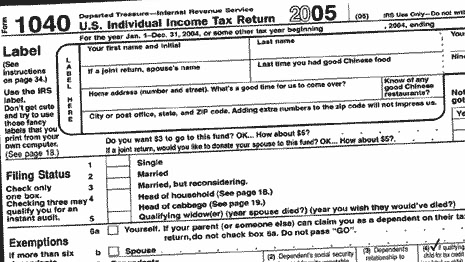
Randy Bish has some ideas for changing our most often used income tax form:
- posted by Kerry M. Kerstetter, MBA~CPA~ATP~ATA @ 3/05/2005 11:12:00 PM Send this post:
Mansfield, Ohio mom jailed for paltry 96 cents income tax bill – Thanks to Ben Cunningham for this story of where one town places its crime stopping priorities. That town must have the lowest crime rate in the country if they have time and resources to toss a woman in jail over 96 cents.
The real lesson in this story is one I have been telling for decades. Even if you don’t owe any taxes, it is a very prudent self defense measure to file an income tax return proving that fact. When you don’t file a tax return, the tax agencies’ imaginations go wild, and they proceed to pursue you as if you owed millions of dollars in taxes.
- posted by Kerry M. Kerstetter, MBA~CPA~ATP~ATA @ 3/05/2005 03:38:00 PM Send this post:


New IRS Employee?

- posted by Kerry M. Kerstetter, MBA~CPA~ATP~ATA @ 3/03/2005 12:04:00 PM Send this post:
Greenspan Touts Idea of a Consumption Tax
"A simpler tax code would reduce the considerable resources devoted to complying with current tax laws, and the freed up resources could be used for more productive purposes," Greenspan said.
- posted by Kerry M. Kerstetter, MBA~CPA~ATP~ATA @ 3/03/2005 11:41:00 AM Send this post:
IRS Interest Rates Rise for the Second Quarter of 2005 – To six percent as of 4/1/05, from the five percent rate it’s been since 10/01/04. I have updated that info on my Quick Reference page.
- posted by Kerry M. Kerstetter, MBA~CPA~ATP~ATA @ 3/02/2005 10:06:00 PM Send this post:
Q:
Subject: can we change to a c corp now
We are an s corp and made money this year but took a very small salary.
We are using the Intuit tax preparation program. It asks if we are an s corp or c corp. Can we decide not to be an s corp and just prepare our taxes with the c corp forms?
The 1120S forms that are due by June 30 of this year: Are they establishing that we are an s corp for the last tax year (2004) or this tax year (2005)? thanks for any input you have.
A:
If you have a corporation, you really should be working with a tax pro to handle easy issues such as this. In fact, you should have been working with one before you chose to become an S corp.
If IRS has accepted your election to be an S corp, you need to file S corp returns (1120S) for every year until you formally revoke the S election. You can't just arbitrarily change the status from S to C year by year. When you filed the S election form, you obligated yourselves to reporting all corp income on your 1040.
The 1120S for 2004 is due 3/15/05. You can get an automatic six month extension (to 9/15/05) by filing Form 7004 by that date. I have no idea where you are getting a June 30 due date. All tax return due dates are on the 15th of the month.
Good luck.
Kerry Kerstetter
- posted by Kerry M. Kerstetter, MBA~CPA~ATP~ATA @ 3/02/2005 01:52:00 PM Send this post:
Q:
Subject: Section 179
Hi Ken,
Can you tell me if a sailboat put into charter or as a rental qualifies for section 179 deductions. I have inherited a large sum of money of which some is taxable. I read that aquistion of property through inhertance does not qualify, but in fact I could use other monies to purchase the boat. I need to find a way to write off up to 140K, can you help me?
Thanks in advance,
A:
Paul:
If you are going to be providing services along with the rental of the boat, its purchase should qualify for the Section 179 expensing election, which is up to $105,000 for 2005 purchases.
Where the money comes from for the purchase doesn't affect the Section 179 deduction. As I've mentioned several times before, the deduction is the same whether the asset is paid for with cash or financed completely with a loan.
What you may be referring to is the limit on the Section 179 deduction to your taxable income. In most cases, this limit does include income from other trades and businesses, including W-2 wages, in addition to the one for which the asset was acquired. Depending on what kind of income is being passed through to you via the estate, it may or may not raise that eligible deduction. Any Sec. 179 amount that can't be claimed for the current year because of this limit can be carried forward to the next year's tax return via Form 4562.
When dealing with large amounts of money, you would be well advised to consult with a tax pro who can give you more specific advice based on your circumstances. There are also ways to double the potential Sec. 179 deduction with the use of a C Corporation, which you should discuss with your personal tax advisor.
Good luck.
Kerry Kerstetter
Labels: 179
- posted by Kerry M. Kerstetter, MBA~CPA~ATP~ATA @ 3/02/2005 01:40:00 PM Send this post:
Q:
Subject: Primary Residence Sale
Hasn't the capital gains rule of 2 out of aggregate of 5 years rule changed in Oct 2004? Doesn't the IRS code now require you to OWN the residence at least 5 years and live in it as principal residence at least 24 of the 60 months before sale? Or is that just for investment acquisition? I am darn confused here.
Thanks,
A:
The only change was for residences that were acquired as part of a 1031 exchange. I discussed it in my blog back in October.
Kerry Kerstetter
Labels: 1031
- posted by Kerry M. Kerstetter, MBA~CPA~ATP~ATA @ 3/02/2005 01:34:00 PM Send this post:

